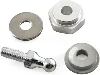
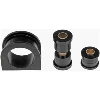
An iron suspension bushing is a critical component in automotive engineering, serving as the connection point between the engine mounting system and the vehicle chassis. It plays a fundamental role in isolating vibrations, reducing noise, and maintaining stability during engine operation and driving. By absorbing shocks and minimizing metal-to-metal contact, iron suspension bushings enhance ride comfort, improve handling, and protect other vehicle components from premature wear. Choosing high-quality bushings, such as those produced by Jinghong Precision, is essential for ensuring long-term durability and reliable vehicle performance.
Iron suspension bushings are typically composed of high-strength iron cores combined with elastomeric or rubber layers. The iron core provides structural rigidity, allowing the bushing to withstand high loads, while the surrounding rubber or polymer layer absorbs vibrations and accommodates slight misalignments between engine and chassis components. This combination allows the suspension system to deliver precise control over engine movement while maintaining passenger comfort. The bushing's design and material selection are critical for achieving the right balance between stiffness and damping.
There are several types of suspension bushings used in automotive applications. Standard iron bushings are ideal for conventional vehicles where durability and cost-effectiveness are priorities. Performance-oriented or heavy-duty bushings may incorporate reinforced elastomers or polyurethane layers to handle higher torque and aggressive driving conditions. Some bushings are designed with precision-machined iron cores to ensure exact fitment and reduce wear over time. Understanding the differences in material composition, hardness, and load-bearing capacity helps manufacturers and automotive engineers select the appropriate bushing for each vehicle model.
Compared to fully rubber bushings, iron suspension bushings provide greater structural strength and improved load distribution. This makes them particularly suitable for engine mounts where high forces are applied during acceleration, braking, and cornering. Additionally, the combination of iron and elastomer extends the lifespan of the bushing by resisting deformation under high temperatures and repetitive stress. Recent advances in material engineering have focused on improving corrosion resistance, wear properties, and vibration damping performance, ensuring that modern iron suspension bushings can meet increasingly stringent automotive standards.
From an industry perspective, raw material trends and manufacturing techniques are critical for bushing performance. High-quality iron is sourced to ensure structural integrity, while elastomers are optimized for temperature stability and resilience. News in automotive materials highlights the development of hybrid polymers and surface coatings that enhance wear resistance and reduce maintenance requirements. Suppliers who integrate advanced machining, coating, and quality inspection processes provide bushings that are more reliable, environmentally resistant, and cost-efficient over the vehicle's lifespan.
The installation of an iron suspension bushing involves several precise steps. First, the old bushing or worn component is removed carefully to avoid damaging the chassis or engine mount. The new bushing is then aligned with the mounting holes and pressed or bolted into place using specialized tools. Correct torque settings are critical to prevent over-compression, which can reduce vibration damping efficiency, or under-compression, which can cause excessive engine movement. After installation, technicians perform visual inspection and road testing to verify stability, noise reduction, and proper engine alignment. Routine maintenance primarily focuses on monitoring wear and ensuring that surrounding components, such as bolts and brackets, remain secure.
In conclusion, the iron suspension bushing is a vital component in modern vehicles, providing essential vibration isolation, structural support, and ride stability. By understanding the different types, material properties, manufacturing trends, and proper installation procedures, automotive engineers and mechanics can ensure optimal engine performance, enhance passenger comfort, and extend the lifespan of both the bushing and related vehicle systems. Selecting high-quality iron suspension bushings, such as those from Jinghong Precision, guarantees reliable performance in demanding driving conditions and contributes to overall vehicle safety and durability.