


Automotive Hardware
Your Professional Automotive Hardware Supplier
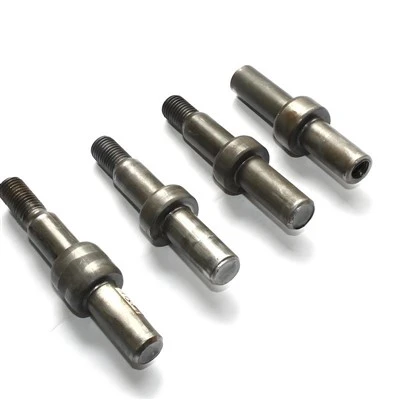
The company was established in August 2019, located in the Nanshan Park of the National Ningguo Economic and Technological Development Zone, covering an area of over 10 acres with factory buildings. The company currently has over 60 employees, including 6 technical personnel, 8 quality management personnel, over 40 frontline workshop operators, and 8 other management personnel.Equipped with CNC machining centers, automatic laser cutting systems, optical inspection devices, and other precision manufacturing equipment, we focus on producing high-accuracy mechanical components such as bushings, brackets, and structural parts.




Why choose us
Quality Control and Testing
All products undergo 100% or sampling inspection before leaving the factory to ensure they meet customer specifications, and provide complete inspection reports (such as dimensional reports, material certificates, etc.).
Professional design
With extensive manufacturing experience, we provide Design for Manufacturability (DfM) guidance to help customers optimize product structure, enhance performance, and reduce overall cost.
Certified Quality System
Our production is managed under ISO 9001 and strictly aligned with the IATF16949 quality requirements, ensuring every process meets international automotive standards.
Service Advantages
With a 24-hour response mechanism, 48-hour on-site support when needed, and structured 8D problem solving, we ensure rapid resolution and continuous improvement.
Automotive Clasp
Automotive Clasp are small but vital components used across industries such as automotive, aerospace, machinery, and consumer electronics. These precision-engineered fasteners secure parts on shafts or within housings, preventing unwanted movement, dislodging, or failure under operational stress. Choosing the right type of retaining clip ensures reliability, safety, and longevity in mechanical assemblies.
Safety
By precisely securing the seatbelt, the buckle ensures that the seatbelt tightly restrains the occupants' bodies during collisions or emergency braking, effectively limiting forward movement and reducing the impact of the head, chest, and other critical body parts against hard objects such as the steering wheel and dashboard, thereby significantly reducing the risk of injury.
Convenience
The design is simple and is usually located next to the driver's or passenger's seat; some models also have them on the inside of the car doors. Drivers can conveniently hang handbags, clothing, maps, and other items, freeing their hands and improving driving convenience.
Durability
Automotive buckles are designed and manufactured with fatigue resistance in mind. For example, brake system retaining clips need to withstand millions of cyclic loads. By optimizing the metallographic structure (such as tempered martensite) and surface treatment processes, the initiation of fatigue cracks is reduced, extending the service life.
Economy
As a small device, the manufacturing cost of an automotive buckle is relatively low. However, it plays an important role in ensuring automotive safety and convenience, offering high cost-effectiveness.
Versatility
Some automotive buckles use a universal design, suitable for various vehicle models and scenarios. For example, universal buckles can be used to secure various components such as seats and air conditioning pipes, improving the utilization and adaptability of the buckle.
Internal Retaining Rings: Installed in a housing bore, these rings grip the inner diameter of a cavity and are commonly used to secure components from the inside out.
External Retaining Rings: Placed around a shaft’s outer diameter, they lock into a groove to prevent parts from sliding off the end.
Snap Rings / Circlips: A subset of retaining rings, typically made from stamped metal with open ends that "snap" into place using pliers.
These come in both internal and external variants and are widely used due to their ease of installation and removal.
Wire Form Retaining Rings: Made from coiled wire, these offer flexibility and resilience in dynamic applications, often used in high-vibration environments.
Constant Section Rings: Uniform thickness rings designed for high load-bearing applications, offering superior strength and consistent performance.
Tapered Section Rings: Thicker on one side, these are ideal for applications where higher thrust loads are expected in one direction.

Applications of Automotive Clasp
Interior Trim & Upholstery
Spring steel retainer clips or J-clips secure door panels, headliners, and seat components without damaging surfaces
Wiring & Harness Management
Cable tie mounts and conduit clips made from plated steel keep wiring organized and vibration-resistant
Underhood Components
High-tension retaining clips hold air ducts, hoses, and sensors securely despite heat and engine movement
Exterior Body Panels
Push-pin or Christmas tree clips provide quick-release fastening for fender liners and splash guards
Specifications of Automotive Clasp
Material Composition
The most commonly used material for automotive metal clips is high-tensile steel, valued for its strength, durability, and resistance to deformation under load. Unlike office binder clips or food bag ties—often made from thin, low-grade steel—car clips are constructed from hardened alloys designed to withstand vibration, temperature fluctuations, and mechanical strain.
Size and Dimensions
Car clip dimensions vary significantly based on application. Standard measurements are provided in millimeters (mm), with common sizes ranging from 10 mm to over 100 mm in length and width. For example, a typical wiring harness clip might measure 20 mm wide by 50 mm long (2 cm × 5 cm), allowing it to securely grip both the wire bundle and mounting bracket.
Load Capacity and Strength
Metal car clips are engineered to support specific weight loads, typically measured in grams (g) or kilograms (kg). While they are not intended for heavy structural support, they must reliably hold components like wiring harnesses, coolant hoses, or sensor lines without sagging or detaching.
Design and Functional Variants
Automotive metal clips come in various shapes tailored to their function. Flat, wide clips are ideal for securing wiring harnesses along frame rails or body panels. Circular or C-shaped clamps encircle pipes and hoses, ensuring full contact and stability. Some models include internal rubber or silicone liners that cushion sensitive components, preventing abrasion, noise, and damage from metal-on-metal contact.
Carbon Steel: Widely used for its high tensile strength and affordability. Often coated with zinc or phosphate to improve corrosion resistance. Ideal for general industrial and automotive applications.
Stainless Steel (e.g., 300 Series): Preferred in environments exposed to moisture, chemicals, or extreme temperatures due to excellent corrosion resistance and non-magnetic properties. Commonly found in food processing, marine, and medical equipment.
Tool Steel: Used for heavy-duty applications requiring maximum strength and wear resistance, though less common due to higher cost.
High-Performance Alloys (e.g., Inconel, Hastelloy): Employed in extreme conditions such as jet engines or chemical reactors where both heat resistance and structural integrity are crucial.

How to Replace Automotive Clasp
Locate the Damaged or Missing Clip
Inspect the affected area—common locations include fender liners, splash guards, interior trim, bumpers, and undercarriage panels. Look for signs of looseness, rattling, or visible gaps where a clip should be securing components together.
Remove the Old or Broken Clip
If the clip remains in place, apply penetrating oil and let it sit for 5–10 minutes if corrosion is present. Use a clip removal tool or insulated screwdriver to gently pry the clip outward. For E-clips or retaining rings, use needle-nose pliers to compress and slide them off shafts or pins.
Clean the Mounting Area
Once removed, clean the hole or bracket thoroughly using a wire brush and rag. Remove rust, dirt, and old adhesive residue to ensure a snug fit for the new clip. Inspect the surrounding material for cracks or deformation that could affect retention.
Select and Align the New Clip
Match the replacement clip exactly to the original. Insert it into the mounting hole at the correct angle—most clips require a straight push, while others (like U-clips) may need lateral insertion before snapping into place.
Install the New Clip Securely
Use pliers or your fingers to press the clip firmly until it clicks or seats completely. Avoid hammering unless specified, as this can distort the clip or damage adjacent parts. For spring-loaded or compression clips, ensure both ends are evenly engaged.
Tighten Larger Structural Clips (If Applicable)
Some heavy-duty metal clips are bolted in place. Use a socket wrench or ratchet to tighten fasteners to the manufacturer’s torque specification. Over-tightening can strip threads or warp brackets.
Verify Alignment and Clearance
Check that the clip does not protrude excessively or interfere with moving parts such as suspension arms, brake lines, or rotating wheels. Ensure trim panels sit flush and do not bind.
Test the Installation
Gently tug on the attached component (e.g., fender liner or trim panel) to confirm it’s securely held. Close doors, hoods, or trunks and listen for any abnormal noises during operation. Drive slowly over bumps to test for vibrations or loosening.
Maintenance
Regular Inspection
Check clips periodically for signs of wear, cracking, deformation, or corrosion. Pay special attention to high-vibration areas or components under constant load.
Cleaning and Contamination Control
Keep clips and their seating grooves free from dirt, grease buildup, and foreign particles. Use non-abrasive cleaners to avoid damaging surfaces or coatings.
Lubrication (When Applicable)
While many clips do not require lubrication, some applications benefit from light oil or anti-seize compounds—especially in corrosive or high-friction environments. Always use lubricants compatible with the clip material.
Correct Installation
Ensure clips are fully seated in the groove and properly aligned. Use the right tools (e.g., retaining ring pliers) to avoid nicks or bending during installation.
Load Monitoring
Avoid overloading clips beyond their rated capacity. Monitor system performance for signs of slippage or axial movement, which may indicate clip failure.
Follow Manufacturer Guidelines
Adhere to OEM specifications for torque, installation procedures, replacement intervals, and compatible parts. Using non-approved substitutes can compromise safety and performance.
Certificates


