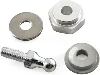
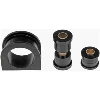
Clips, as a mechanism for snap-fitting or locking parts together, play an indispensable role in automotive assembly. They are typically made of flexible plastic and are widely used to connect plastic parts. Snap-fit connections are renowned for their ease of installation and removal, even allowing tool-free disassembly. This advantage is fully utilized in automotive interior connections.
So, why are snap-fit connections chosen for automotive assembly? This is primarily because some parts, if designed as a single unit, are not only bulky and inconvenient to transport, but also complicate the assembly of sub-components within. Therefore, cleverly designing these parts into multiple sub-components connected by snaps not only optimizes transportation and disassembly, but also significantly reduces costs.
In terms of material, automotive clips are primarily made of plastic, accounting for over 70%, while metal accounts for less than 30%. This is due to the many advantages of plastic clips. First, the density of plastic is much lower than that of metal, making their extensive use in vehicle assembly a significant weight reduction. Secondly, the molding process for plastic clips is simpler than for metal clips. Most plastic clips can be formed in a single injection molding process, while metal clips require multiple machining steps, including cutting, punching, bending, and surface treatment. Furthermore, plastic clips are more affordable. The simple process and low material costs reduce overall processing costs.
Plastic clips are also more environmentally friendly than metal clips. Due to their excellent corrosion resistance, plastic clips require no surface treatment, which reduces environmental pollution. Metal clips, on the other hand, can rust or corrode from automotive oils and chemicals, requiring complex surface treatment processes, each of which generates potentially polluting wastewater. Furthermore, plastic clips produce easily recyclable scrap, while metal clips produce small scraps during punching, but recycling is more difficult.
Plastic clips offer excellent insulation performance, making them particularly suitable for connecting electrical components, making them an unmatched alternative for metal clips.
Plastic clips are also more resilient than metal clips, making them less prone to noise during use and enhancing user comfort.
Plastic clips offer less damage to the cross-section of components during collisions, such as crumple zones or airbag deployment, ensuring safe use.
Plastic clips also minimize damage to components during repeated assembly, helping to maintain their strength and stability.